
How to Cook Chicken
Cook juicy chicken breast every time with the right pan heat, a rest, and the temperature that actually tells you it is done.
Chicken Goes Dry Long Before It Goes Bad
Most dry chicken is overcooked chicken. People cook it until the outside looks safe, and by then the center has blown past 165F and squeezed out its water.
Cook to temperature, not to color or time. Pull breasts off the heat at 157F to 160F and let carryover finish the job while they rest.
Even Thickness Wins
Pound or split breasts to an even 3/4 inch so the thin end is not leather by the time the fat end is cooked.
Dry Surface, Hot Pan
Pat the chicken dry and get the pan to medium-high before the oil goes in — wet chicken in a warm pan steams instead of browning.
Thermometer In The Thick Part
Probe the thickest part from the side, avoiding bone, and look for 157F to 160F on breasts, 175F to 185F on thighs and drumsticks.
Rest Before You Cut
Let it sit 5 to 10 minutes — cutting right away dumps the juice on the board instead of leaving it in the meat.
The method
- 1
Even it out and season
Pound thick breasts to about 3/4 inch, or slice them in half horizontally. Pat dry and salt both sides at least 15 minutes ahead if you have the time.
- 2
Heat the pan properly
Set a heavy skillet over medium-high for two to three minutes, then add a tablespoon of oil. It should shimmer, not smoke.
- 3
Sear and leave it alone
Lay the chicken down away from you and do not touch it for five to six minutes. Move it only when it releases from the pan on its own.
- 4
Flip once and finish
Turn it over, drop the heat to medium, and cook another five to seven minutes. Add a pat of butter here if you want a quick pan sauce.
- 5
Check the temperature
Slide the thermometer into the thickest part from the side. Breasts come off at 157F to 160F, thighs and legs at 175F to 185F.
- 6
Rest, then slice
Move the chicken to a plate or board and wait 5 to 10 minutes. Slice against the grain and spoon any collected juice back over the top.
Show what you know
Three questions. See if your chicken instincts hold up.
Question 1 of 3
Your thermometer reads 165F in the thickest part, but juice near the bone still looks pink. What now?
Put it to work
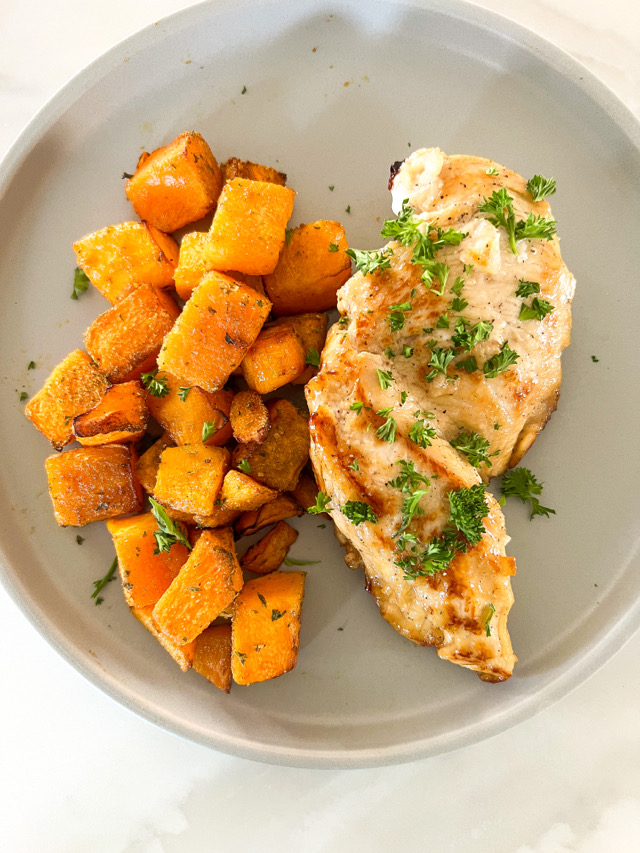
A 20-minute skillet dinner where searing the tenders just right — golden outside, juicy inside — is the whole job before the honey butter sauce hits the pan.
★ dinner
 dinner
Honey Butter Garlic Chicken
The best chicken you’ll ever make
 Nicole Renard
Ingredients
- 1.5 lbs Chicken tenders
- 1 Tbs Olive oil
- 3 Tbs Butter, melted
- 4 cloves, minced Garlic
- 3 Tbs Honey
- 2 Tbs Apple cider vinegar
- To taste Salt
- To taste Pepper
- 2 Tbs Chopped parsley
Instructions
- 1In a medium bowl, whisk together melted butter, garlic, honey, apple cider vinegar salt and pepper until combined.
- 2Place chicken tenders in the bowl and coat them completely in the marinade. Let them sit in the marinade for 5-10 min.
- 3Heat olive oil in a non stick skillet over medium heat.
- 4Add chicken in a single layer cooking each side about 4 min each until chicken is cooked through.
- 5Sprinkle with parsley and enjoy!!
P.S. Pepper keeps the recipe, the timings and your own notes in one place — so the next time you cook it, you're not starting from a search box.

More cooking tips
Never lose a recipe again
Save everything. Stay organized. Share with friends.