
Why You Should Care More About Olive Oil
Piro has become my new favorite EVOO brand on the market, here's why
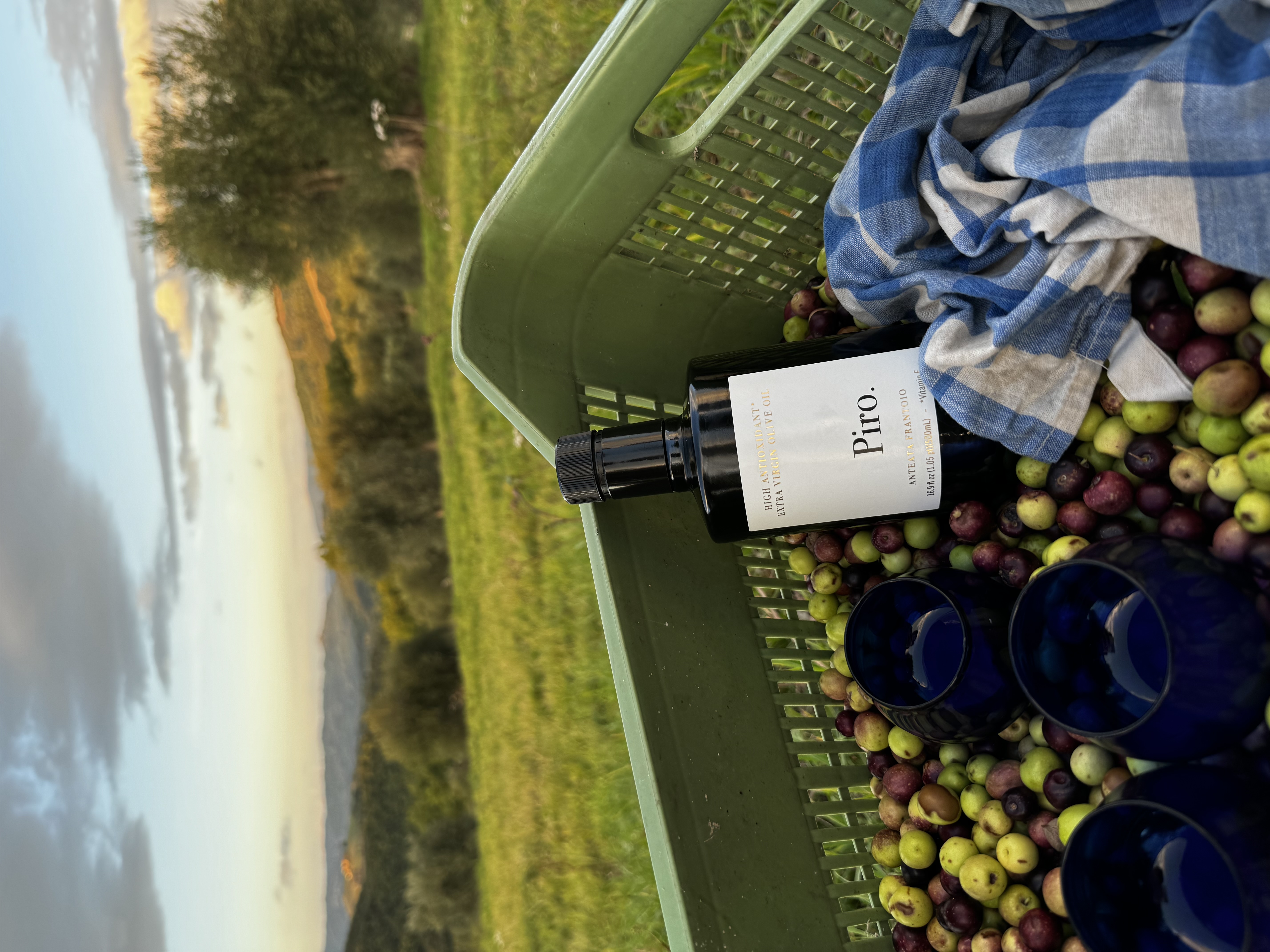
I have a big Hear Me Out concoction to share. Please just trust me on this one, because it will change your life (or at the very least, your dessert habits). Three ingredients: a scoop of vanilla ice cream + a generous drizzle of really good olive oil (Piro has officially won the top spot for my favorite EVOO on the market) + a pinch of flaky salt on top.
I have preached the dessert gospel of soy sauce on ice cream for years, but this combo has been my new hyperfixation since I tried it. I love the combo of the creamy, oily, and crunchy textures, and the way that the subtle olive-y, slightly bitter taste cuts through the sweetness without overpowering. The salt just ties it all together (because flaky sea salt goes well on literally everything).
It’s the easiest recipe in the world (I don’t even know if you can really call it one), but the catch is that it only works if the olive oil is actually good. Bland, flavorless olive oil just makes your ice cream taste like you didn’t wash your bowl or spoon well enough before scooping. Peppery, grassy, real olive oil is what makes the whole thing feel like a restaurant-quality luxe dessert.

All of that to say, this new obsession sent me down a rabbit hole on what actually separates an okay bottle of olive oil from a great one, so here we go!
Why Not All Olive Oil Is Created Equal
The first major thing to note is that Extra Virgin Olive Oil (EVOO) is a legal category of olive oil. The extra words do make it sound fancier, but a bottle can technically qualify as EVOO and still taste like nothing, because when and how the olives were picked matters just as much as what's written on the label.

Most olive oil comes from olives harvested late in the season, when they're fully ripe, soft, and dark. Ripe olives produce more oil per tree, which is great for a producer's bottom line, but it’s also pretty forgettable for your taste buds. Late-harvest oil tends to be mild, mellow, and a little flat. That’s what makes up most of the flavorless grocery store olive oil you see.
Early harvest oil is the opposite approach. Producers pick the olives while they're still green and underripe, which means less oil per tree, more labor, and a much bigger investment for a much smaller yield. What you get back for that trade-off is oil that's bolder, greener, peppery at the back of your throat, and much higher in the plant compounds that make olive oil such a complex condiment that’s worth paying attention to and investing in.
Quick TLDR on the science of it all:
Green, underripe olives are loaded with polyphenols, the antioxidant compounds responsible for that peppery bite you feel in your throat after a good sip. I keep using the word “peppery” for a reason. Good olive oil is distinguishable because it has a kick to it. That comes from a compound called oleocanthal, which research has linked to anti-inflammatory effects similar to ibuprofen. That means that the olive oil that tastes the most intense is very often the one doing the most for you nutritionally, too!
Meet Piro: The Bottle That Sent Me Down This Rabbit Hole

The oil that started this whole thing for me is Piro, a small-batch extra virgin olive oil out of Tuscany. It's become the one I reach for anytime I want an oil to actually taste like something.
Piro is made on the slopes of Monte Amiata in Southern Tuscany, from centuries old olive trees. The olives are hand-harvested early in the season while they're still green, then cold-pressed within hours of picking, which is the window that actually preserves flavor and those beneficial plant compounds before they start to break down.
The result is an oil with personality: green almond, fresh herbs, a little artichoke, and that classic peppery finish at the back of your throat that tells you the polyphenols are doing their job. It's the kind of oil that makes plain bread, a simple salad, or a scoop of vanilla ice cream, taste effortful and interesting.
If you want the full story, the “All About Piro” video on their website is a genuinely great watch, it walks through the harvest, the family behind it, and what actually happens between the tree and the bottle!
A Very Short History of Olive Oil
Archaeologists have traced olive cultivation back roughly 6,000 years to Crete, which makes olives one of the oldest foods humans have deliberately farmed and processed, rather than just foraged. By the time of ancient Greece, olive oil was used for cooking, of course, but it was also used as currency.
Olympic athletes were anointed in it before competing. Winners of the Panathenaic Games were handed amphorae of olive oil worth what could amount to years of an average person's wages. An entire branch of Greek mythology exists because Athena won the naming rights to Athens by gifting the city an olive tree. It's one of the only foods that's stayed relevant, valuable, and largely made the same way for thousands of years!
Snag a bottle of Piro Olive Oil here, and reply with a photo if I’ve hashtag influenced you enough to put it on ice cream!
Xx,
Saanya